Introduction
For passenger vessel operators, properly maintained lifesaving appliances are the difference between an orderly evacuation and a preventable catastrophe. Lifeboats, life rafts, lifejackets, and related release and retrieval systems are subject to International Convention for the Safety of Life at Sea (SOLAS) standards, flag-state requirements, and manufacturer instructions that together define statutory obligations and practical maintenance expectations.
This article clarifies key SOLAS requirements and offers industry best practices tailored to operators of small passenger vessels. It emphasizes operational readiness, maintenance regimes that fit limited crewing and budgets, and recordkeeping practices that help during inspections and incident responses.
Readers will find actionable guidance on inspection readiness, routine checks, servicing intervals, human factors such as crew training and drills, and ways to integrate lifesaving appliance maintenance into a practical Planned Maintenance System (PMS) or safety management framework.
SOLAS framework and what it means for small passenger vessels
SOLAS Chapter III and the International Life-Saving Appliance (LSA) Code set international standards for life-saving appliances and arrangements. While many small passenger vessels operate under national or regional adaptations of SOLAS, the principles are the same: lifesaving appliances must be fit for service, correctly stowed, maintained, and capable of reliable operation in an emergency.
Operators should view SOLAS requirements as a baseline for safety rather than a checklist to be minimally satisfied. Practical application includes aligning manufacturer recommendations with statutory surveys, ensuring items are serviced by approved technicians, and documenting actions so flag-state inspectors and classification societies can verify compliance.
For support interpreting SOLAS obligations in the context of local regulations and certificates, Marine Safety Consultants provides maritime compliance services to help confirm how international requirements map to your vessel’s documentation and survey cycle. Integrating that guidance early avoids last-minute remedial work before renewal surveys or port state control visits.
Lifeboat and davit maintenance: statutory obligations and best practices
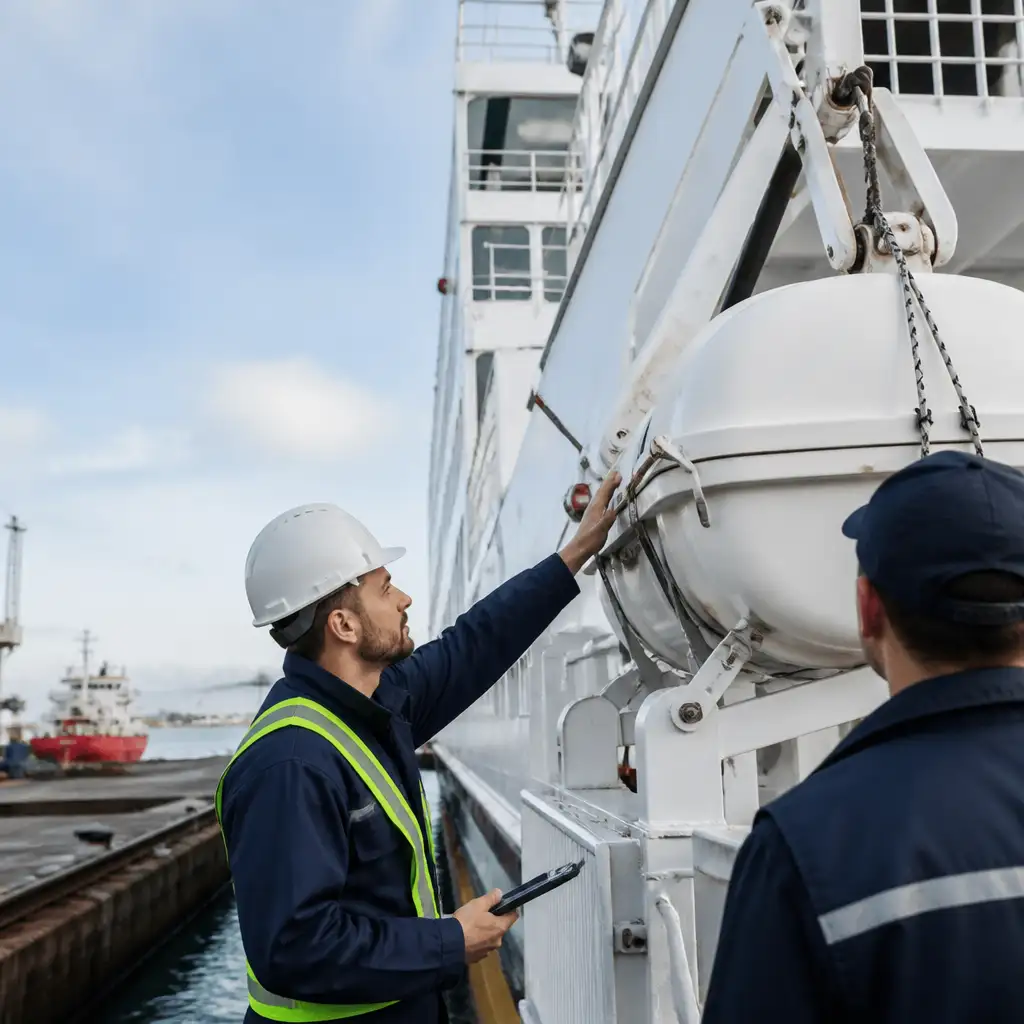
Lifeboats and their launching appliances are among the most critical lifesaving devices on passenger vessels. SOLAS requires that survival craft, launching appliances, and release gear be maintained in efficient working order and that launching arrangements permit rapid embarkation and launching.
Key maintenance practices include routine visual inspections, lubricating moving parts, checking wire falls and slings for corrosion or broken strands, and ensuring winches, brakes, and clutches function smoothly. Operators should maintain a documented check regime that covers daily/weekly visual checks and more thorough periodic examinations.
On-load release mechanisms and gravity davits present particular hazards. Service and testing should follow manufacturer guidance and, where required by the flag state, be performed by approved technicians. Any on-load release used for lowering must be examined and serviced at intervals set by regulations or the manufacturer; after servicing, it should be function tested without a live embarkation when possible.
When planning maintenance, adopt risk-based prioritization: components essential to lowering and recovery (falls, hooks, hydraulic systems) get higher frequency and more detailed inspection than non-critical finishes. Keep spare parts for wear items and maintain qualified personnel or contracts for hoist and winch servicing to minimize downtime and ensure safe operations.
Inflatable life rafts and hydrostatic releases: inspection and servicing
Inflatable life rafts are compact and reliable when maintained per SOLAS and the LSA Code. Statutory regimes generally require both periodic servicing by approved servicing stations and interim on-board checks. Typical practices include monthly visual checks of pack condition and securing arrangements and annual servicing by an approved technician.
Hydrostatic release units (HRUs) are essential to automatic raft deployment when a vessel sinks. HRUs are designed to operate at a specified immersion depth, but they must be serviced or replaced at intervals recommended by the HRU manufacturer or the approving body. Record the installation and replacement dates so inspections can verify compliance quickly.
Operators should verify that servicing stations are approved by the relevant administration or recognized organization, that service labels and certificates are applied correctly, and that servicing reports are retained in the vessel’s safety file. Replace rafts or HRUs showing signs of water ingress, compromised protective packing, or expired service tags even if the item has not been used.
Lifejackets, immersion suits, and personal equipment: checks and storage
Personal life-saving appliances are subject to frequent handling and environmental exposure. SOLAS standards cover buoyancy performance and stowage, but practical readiness comes down to inspection, correct stowage, and crew familiarization.
Effective checks include weekly or monthly inspections of seams, straps, reflective tape, and lights; battery checks for lights and AIS beacons; and inflation system checks for inflatable jackets. Replace or service any lifejacket showing damage, degraded buoyancy material, or failed inflation systems. Keep a small number of spare lifejackets and ensure sizes and donning instructions meet passenger requirements.
Immersion suits require the same deliberate inventory planning. Where they are required, the vessel should carry enough serviceable suits for everyone on board, with sizes appropriate for the adults and children expected to sail. Operators should verify fit and size distribution whenever passenger or crew profiles change, clearly mark storage locations, inspect seals, zippers, lights, and reflective material, and make sure everyone can locate and don the correct suit during an emergency.
Stowage is equally important: lifejackets should be accessible from muster stations and protected from UV, oils, and chemicals that accelerate material degradation. Label storage locations and maintain a simple inventory that includes service dates and any repairs.
Building a practical maintenance regime and recordkeeping
Small passenger vessel operators often balance limited crew and tight schedules. A pragmatic maintenance regime is structured, risk-based, and documented. Start with a simple Planned Maintenance System (PMS) or checklist that ties actions to calendar dates, hours underway, or crew drills.
Elements of a practical regime:
- Daily/weekly checks: visible condition, securing, battery status for lights and beacons.
- Monthly functional checks: inflation system indicators, requirement-driven lowering drills or simulated functions where safe to do so.
- Annual statutory servicing: life raft servicing, HRU replacement, davit and release gear inspection by qualified technicians.
- Event-driven actions: any activation, heavy weather event, or impact requires immediate examination and potential out-of-service tagging until inspected.
Recordkeeping is essential for compliance and investigations. Maintain a dedicated lifesaving appliance log that includes inspections, servicing certificates, replacement dates, drill records, and any corrective actions. Well-organized records demonstrate sound marine risk management and simplify interactions with inspectors and auditors.
Preparing for inspections and improving emergency readiness
Regulatory inspections and port state control examinations focus on evidence: condition, certifications, and operational readiness. Make inspection readiness routine rather than reactive. Keep copies of service certificates in an accessible safety file and ensure that the physical condition of appliances matches the paperwork.
Drills and crew competence are central to emergency readiness. Regular muster and abandon ship drills, familiarization with embarkation routes, and hands-on practice with lifejackets and line handling reduce human error during incidents. Practical training delivered ashore or aboard helps crew retain crucial skills, particularly for infrequently used equipment such as on-load release hooks.
For structured skill development and compliance-focused exercises, consider formal maritime training programs that cover lifesaving appliance operation, inspection protocols, and human factors in emergency response. Training supports both compliance and the vessel’s overall safety culture.
Frequently Asked Questions
Q: How often should life rafts be serviced?
A: Service intervals vary by manufacturer and flag-state requirements, but industry practice is to have inflatable life rafts serviced annually by an approved servicing station and to perform regular on-board visual checks in between service events.
Q: Who can perform on-load release testing for lifeboats?
A: On-load release mechanisms should be serviced and tested by technicians approved by the manufacturer or recognized organizations, and in accordance with flag-state rules. After any activation or servicing, function tests should be documented.
Q: What records are most important to have ready for an inspector?
A: Maintain clear records of service certificates for life rafts and HRUs, inspection logs for lifeboat and davit gear, lifejacket maintenance and light/battery checks, drill records, and any corrective action reports. Organized documentation speeds inspections and demonstrates effective marine risk management.
Whether you are preparing for an inspection, addressing compliance concerns, or evaluating operational risk, Marine Safety Consultants can help support your maritime safety objectives. Call 508-996-4110 or email tom@marinesafetyconsultants.com to discuss your needs.