Introduction
Effective maintenance of firefighting systems aboard small commercial vessels is a frontline defense in protecting lives, cargo, and vessel integrity. For small passenger boats, fishing vessels, and towing craft, the margin for error is small: limited crew, constrained space, and compact systems mean that defects or lapses in inspection can escalate rapidly. Operators and maintenance teams must align routine upkeep with regulatory expectations and practical onboard operations.
This article provides practical, operation-focused guidance on inspection schedules, common defects in portable and fixed systems, U.S. Coast Guard (USCG) compliance expectations, testing procedures, crew training, and how firefighting systems integrate with emergency response planning. The goal is actionable direction that maintenance crews, operators, and safety officers can apply during daily operations and scheduled surveys.
Readers will find checklists, testing priorities, and typical survey findings to assist with planning maintenance cycles and preparations for inspections. References to service and compliance resources are included to support operational readiness and ongoing maritime compliance efforts.
Inspection Schedules and Recordkeeping for Portable and Fixed Systems
Inspection schedules should be risk- and usage-based. For vessels in active service—passenger runs, daily towing, or fishing operations—visual checks of portable extinguishers and fixed systems should be performed at the start of each voyage and more thoroughly on a weekly or monthly basis depending on conditions. Adverse environments such as salt spray, heavy vibration, or oily atmospheres increase inspection frequency needs.
Recordkeeping is equally important. Maintain a clearly written log for each extinguisher and fixed-system component that includes the date of inspection, inspector initials, observations, service actions, and the next due date. These logs support both operational safety and regulatory inspections. Linking equipment records to scheduled maintenance reduces the risk of missed tasks and demonstrates a proactive safety culture during vessel inspections and audits.
For guidance on formal compliance programs and documentation practices, operators should reference available resources on regulatory compliance support to align logs with USCG and flag-state expectations and to integrate firefighting maintenance into your vessel’s safety management documentation.
Common Defects Found in Portable Firefighting Equipment
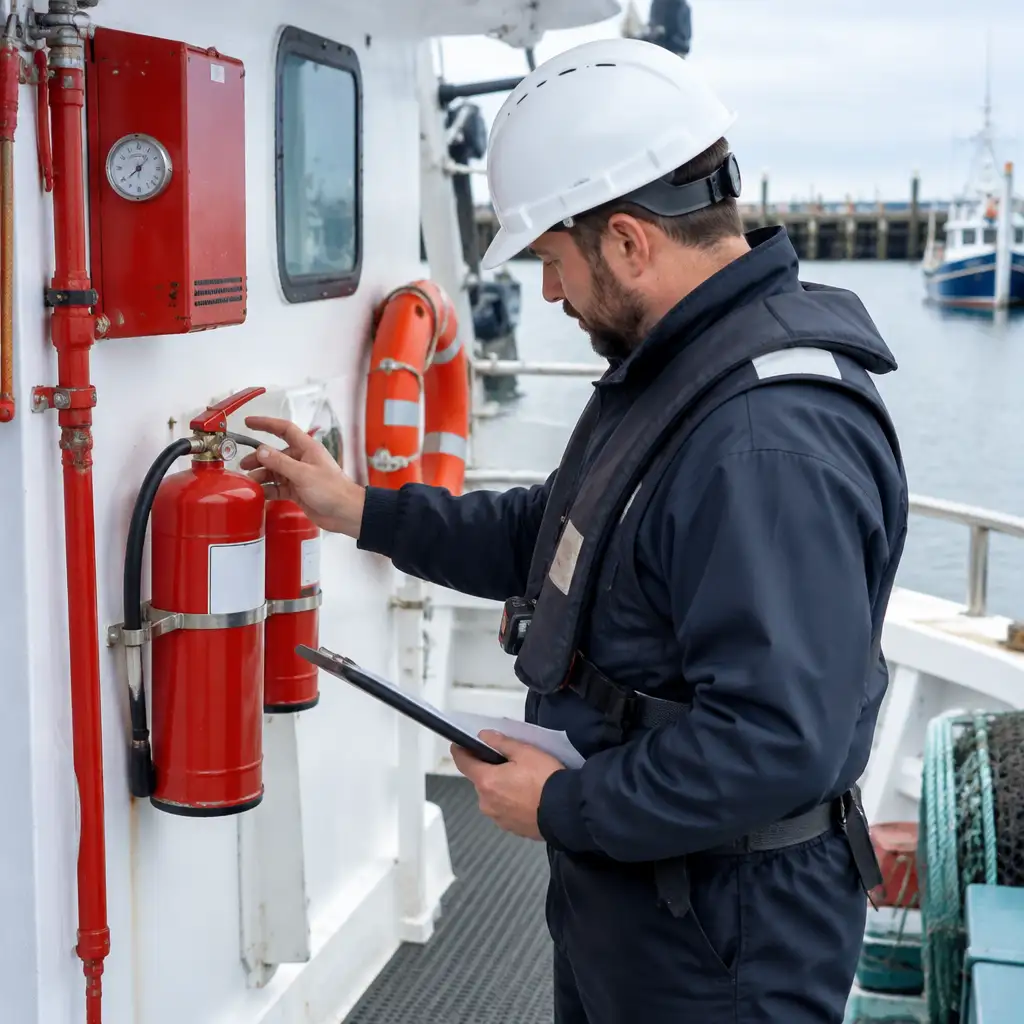
Portable extinguishers are often the first items checked during a casualty or survey. Common defects include discharged or partially discharged units, corrosion of the cylinder, damaged hoses or nozzles, missing pressure gauge readings in the operable range, and improperly mounted or obstructed units. In small vessels where space is tight, extinguishers are sometimes stowed where they are not readily accessible or where they can be damaged during normal operations.
Inspection routines should verify charge pressure, tamper seals, full body integrity, legible labels, and correct agent type for the risks present (e.g., Class B fuel fires versus electrical risks). Replace or service extinguishers showing dents, heavy corrosion, or failed pressure tests. Ensure that portable units have up-to-date hydrostatic test dates where applicable and that disposable types are removed at end of service life.
Include portable-equipment checks in daily safety briefings so crew are aware of location and condition. A simple onboard checklist for portable equipment helps avoid overlooked issues during busy turnarounds and supports compliance during formal vessel inspections.
Common Defects Found in Fixed Firefighting Systems
Fixed systems—engine room suppression, CO2 systems, water mist, and foam systems—present a different maintenance profile. Common defects discovered during surveys and audits include blocked or corroded distribution piping, inoperative actuators, leaking cylinders or valves, expired pilot cylinders, inadequate signage, and compromised discharge nozzles. Inadequate segregation of detection and release circuits is another recurring issue on older installations.
Functional tests of alarms, detection sensors, and actuation circuits are essential. Verify system isolation and manual release operations during drills. Every practice drill must be documented. For inert-gas or CO2 systems, confirm cylinder weights and leakage tolerances; for water-based systems, verify pump readiness, alarm pressure, and seawater intake integrity. Document all corrective actions promptly and retain manufacturer service records for any major repairs.
When retrofitting systems on older hulls, consider layout changes that could affect distribution. Surveys often flag systems that are no longer suitable for the vessel’s current operation—such as a passenger-converted fishing vessel that now requires enhanced detection and notification. A proactive maintenance plan minimizes downtime and safety risk.
USCG Compliance Expectations and Survey Findings
The USCG expects firefighting systems to be maintained to an operational standard commensurate with vessel type, route, and passenger or cargo carriage. Inspectors will check that fixed and portable systems are installed per the approved configuration, maintained, and documented. Common survey findings include missing documentation, improperly tagged equipment, inaccessible extinguishers, and failed functional tests for detection and alarm systems.
During inspections, be prepared to present maintenance logs, service records, hydrostatic test certificates, and training records for personnel who perform system maintenance. Training records must cover every training session and practice drill. If equipment was modified or components replaced, have installation and service documentation available to substantiate equivalency to the approved system. Operators should anticipate questions about manufacturer recommendations and demonstrated testing procedures.
For assistance aligning maintenance and documentation with regulator expectations, consult resources for vessel inspections and consider structured compliance reviews that tie maintenance tasks to USCG guidance. Early identification of repeated survey findings can inform targeted corrective action plans and reduce operational interruptions.
Testing Procedures and Practical Maintenance Tasks
Testing should balance thoroughness with practicality. Daily and weekly checks are largely visual and functional: pressure gauges, tamper seals, obvious corrosion, and access paths. Monthly or quarterly testing can include alarm and detector functional tests, discharge actuator tests, and pump run-ups for water-based systems. Annual procedures generally require more involved testing such as CO2 cylinder weight checks, system integrity tests, and hydrostatic testing of portable cylinders as required by the manufacturer and regulation.
Practical maintenance tasks include keeping discharge ports and piping free of debris, lubricating actuator linkages, ensuring mounting brackets remain secure, and replacing tamper seals after legitimate testing. For fixed systems, conduct a controlled discharge test when feasible in a safe environment or perform simulated releases and confirm detection and alarm chains operate correctly. Always follow safe isolation procedures and notify crew and port authorities before conducting tests that could affect operations.
Create a prioritized task list based on risk, age of equipment, and survey history. A concise checklist for maintenance teams might include: verifying extinguisher pressure, confirming signage and access, testing detection and alarm circuits, validating cylinder weights, and logging all actions. This structured approach supports both operational readiness and demonstrable marine safety practices during audits.
Crew Training and Integration with Emergency Response Plans
Training is a primary control for vessel safety. Crew must be trained not only on the location and operation of portable extinguishers but also on fixed-system activation, system isolation, and safe re-entry procedures following suppression system use. Training frequency should reflect turnover, seasonal work patterns, and changes in operations—regular drills build muscle memory and reveal latent weaknesses in procedures or equipment placement.
Integration with the vessel’s emergency response plan is critical. Firefighting response must be coordinated with muster stations, evacuation routes, engine-room isolation, and communications with shore or rescue services. Include firefighting responsibilities within the overall safety management system and ensure drills simulate realistic scenarios: nighttime conditions, full passenger loads, or machinery space fires with smoke and reduced visibility.
Operators should incorporate formal courses and onboard practical sessions. For structured instruction, consider engaging accredited maritime training programs that cover portable and fixed system operation, command-level decision making, and post-incident documentation. Every training session and practice drill must be documented, including formal courses and onboard practical sessions. These training records support both safety performance and compliance efforts during surveys and audits.
Frequently Asked Questions
Q: How often should portable extinguishers be visually inspected on a small fishing vessel?
A: Visual inspections should occur at the start of each day of operation and after any event that could damage equipment. A more thorough check (pressure gauge, tamper seal, mount security) should be performed monthly, with annual maintenance or hydrostatic testing as required by type and regulation.
Q: What documentation do USCG inspectors typically request regarding firefighting systems?
A: Inspectors will look for maintenance logs, service and hydrostatic test certificates, system schematics or installation records, manufacturer recommended maintenance, and training records documenting every training session and practice drill and showing crew competency in firefighting procedures.
Q: Can a crew safely test a fixed suppression system onboard without shore support?
A: Controlled functional checks of alarms and actuators can be conducted onboard, but full discharges or tests that release agents should be performed with care, appropriate isolation, notifications, and ideally in port with shore support. Follow manufacturer procedures and regulatory guidance to prevent harm and operational disruption.
Whether you are preparing for an inspection, addressing compliance concerns, or evaluating operational risk, Marine Safety Consultants can help support your maritime safety objectives. Call 508-996-4110 or email tom@marinesafetyconsultants.com to discuss your needs.