 Introduction: Fog as a Defining Operational Risk
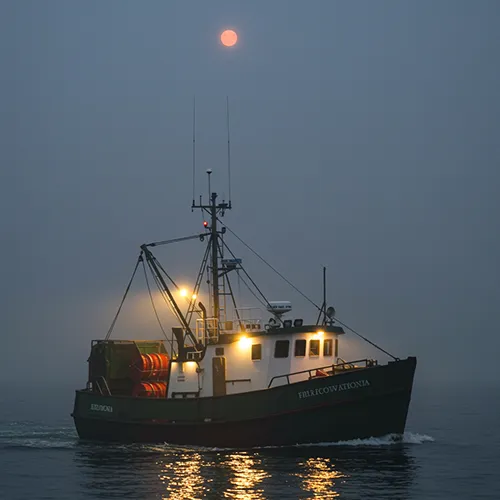
Restricted visibility is not an occasional inconvenience for New Bedford vessels—it is a recurring operational reality. Dense fog banks can form quickly in Buzzards Bay and linger for hours, reducing visibility to mere yards. When this happens, the margin for error narrows dramatically.
Fishing vessels, ferries, tugs, barges, and recreational traffic often share confined waters. Each operates under different constraints, speeds, and priorities. When visibility drops, situational awareness depends almost entirely on discipline, communication, and instrumentation.
Fog does not cause collisions—breakdowns in coordination do. Managing restricted visibility effectively requires planning, clear watchstanding procedures, and consistent application of navigation rules.
The Regional Risk Picture: Buzzards Bay and Harbor Traffic
Buzzards Bay is one of the most active maritime corridors in southern New England. Traffic includes commercial fishing vessels departing and returning to port, ferries transiting predictable routes, towing operations, and seasonal recreational craft. Congestion increases risk even in clear weather.
In fog, this congestion becomes more complex. Radar screens fill with targets, and determining intentions requires interpretation rather than visual confirmation. Narrow channels and shifting currents further reduce reaction time.
The approaches to New Bedford Harbor add another layer of complexity. Close quarters near jetties, moored vessels, and waterfront infrastructure require precision navigation. When visibility is restricted, even familiar routes demand heightened attention.
Common Collision Triggers in Mixed-Use Waters
Many collision risks arise from assumptions rather than outright negligence. A vessel may assume another will maintain course, alter early, or monitor a specific channel. When those assumptions differ between operators, confusion emerges.
Late communication is another frequent trigger. Waiting until vessels are already in close proximity reduces maneuvering options. Early contact allows for clearer passing arrangements and coordinated decisions.
Speed management is often underestimated. Maintaining excessive speed in restricted visibility reduces reaction time and increases stopping distance. Adjusting speed appropriately is one of the simplest yet most effective collision prevention measures.
Bridge Discipline and Watchstanding Standards
Strong watchstanding practices form the backbone of collision avoidance. Even on smaller vessels with limited crew, roles should be clearly defined. One person should focus on helm control while another monitors radar and AIS whenever possible.
Verbal confirmation strengthens coordination. Announcing radar contacts, bearing changes, and closest point of approach (CPA) values ensures shared awareness. Silence in restricted visibility can allow misunderstandings to develop unnoticed.
Maintaining a proper lookout is a legal requirement under navigation rules. Even in fog, the human element remains critical. Sound signals, radar interpretation, and attentive listening work together to create a complete situational picture.
Communications: Clear, Early, and Consistent
Effective communication reduces ambiguity. Vessels should identify themselves clearly, state their position relative to known landmarks or buoys, and declare their intended maneuver. Plain language avoids confusion.
Monitoring the correct VHF channels for the area is equally important. In high-traffic zones, consistent listening habits prevent missed calls and misunderstandings.
Professional tone and brevity matter. Clear, concise exchanges minimize radio congestion and reduce the risk of misinterpretation. Predictable communication habits contribute directly to safer navigation.
Technology: Radar, AIS, and Their Limitations
Modern vessels rely heavily on radar and Automatic Identification System (AIS) data during restricted visibility. Radar provides detection of both equipped and non-equipped targets, while AIS offers identification and speed information for participating vessels.
However, technology has limitations. Not all small craft carry AIS, and radar interpretation requires skill. Clutter, sea return, and improper gain settings can obscure important contacts.
Technology supplements but does not replace seamanship. Operators must understand how to interpret data accurately and cross-check information through multiple sources whenever possible.
Gear in the Water: Unique Fishing Hazards
Fishing operations introduce hazards that other mariners may not anticipate. Nets, lines, and trawls in the water restrict maneuverability and create entanglement risks. A fishing vessel actively hauling may have limited ability to alter course quickly.
Clear signaling of fishing activity and constraints helps nearby vessels make informed decisions. Broadcasting intentions early reduces uncertainty and improves passing safety.
Managing gear layout and maintaining awareness of surrounding traffic ensures that fishing activity does not unintentionally escalate into navigational conflict. Communication and predictability are key to safe coexistence.
Conclusion: Predictability as the Strongest Defense
Collision avoidance in restricted visibility depends on discipline, preparation, and cooperation. Fog conditions demand slower speeds, sharper attention, and proactive communication.
Vessels that maintain structured watchstanding practices and consistent radio habits reduce uncertainty for everyone on the water. Predictable behavior allows others to anticipate movements and respond safely.
In the congested waters around New Bedford, professionalism and preparedness remain the strongest defenses against collision. When operators combine seamanship, technology, and communication, even dense fog can be navigated safely.
Ensure the utmost safety and compliance for your marine operations. For expert advice and comprehensive marine safety services, call us at 508-996-4110 or email tom@marinesafetyconsultants.com. Let's prioritize your safety together.