Introduction
Marine casualties — collisions, groundings, engine failures, and onboard fires — create urgent demands on masters and crew. In the first 24–72 hours after an event, decisions about safety, navigation, and operations must be balanced with a parallel imperative: preserve evidence that regulators, insurers, and investigators will need to determine cause and liability. Proper early actions reduce legal exposure, protect insurance interests, and improve opportunities to identify root causes and corrective measures.
This article provides a practical, operations-focused checklist for masters and crew. The guidance is scoped to immediate actions and evidence preservation priorities, emphasizing safety first, then controlled actions to secure physical and digital evidence. The steps align with common regulatory expectations, good investigative practice, and insurance claim needs without replacing formal reporting requirements.
Expectations: this checklist assumes the vessel is attended by trained crew and that lifesaving efforts take precedence. Where emergency response requires deviation from evidence-preservation steps, document the deviation and the reason. The aim here is practical, usable guidance for real-world maritime operations that supports compliance, investigations, and timely claim handling.
Immediate actions to secure life and vessel
First priorities are life safety and minimizing environmental harm. Before collecting evidence, confirm all personnel are accounted for, treat injuries, and stabilize the vessel to the extent possible. Use established emergency procedures and checklists from the vessel safety management system. Record times of key actions and decisions as soon as practicable.
After immediate lifesaving, stabilize propulsion, steering, and electrical systems as needed to prevent further damage or drifting into hazards. If the vessel is at risk of sinking, grounding, or fire spread, coordinate evacuation or abandonment according to company procedures and regulatory guidance. Document every step with timestamps, names, and short notes; these early logs become critical evidence.
Where practical and safe, secure the scene by isolating the affected spaces and limiting movement of crewmembers who are not required for essential operations. Identify and mark any debris fields, damaged rigging, or areas of structural compromise. Avoid unnecessary handling of items that may be evidence; if items must be moved for safety, photograph and document their original positions first.
Preserving physical evidence on deck and hull
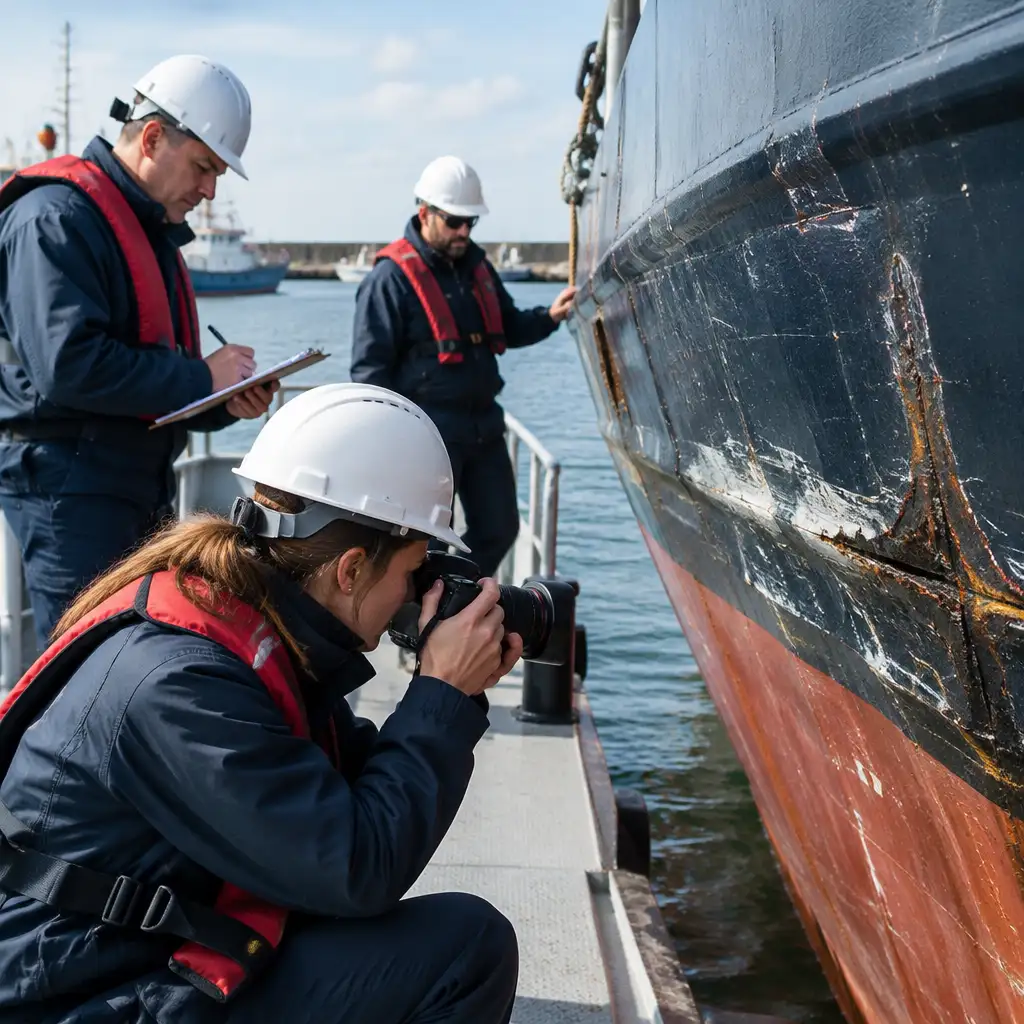
Photograph and video the scene extensively and immediately. Capture wide-angle images showing the vessel relative to the contact, then progressive close-ups of impact points, hull breaches, paint transfer, bent stanchions, broken equipment, and debris. Use reference scales where possible (a measuring tape, a clipboard with date/time) and record the camera or device identifier with each image.
Mark and tag physical evidence. Secure loose items in labeled evidence bags, boxes, or secured lockers. Maintain a simple chain-of-custody log that notes who collected the item, time and date, location aboard the vessel, and where the item is stored. Avoid cleaning or repairing damaged areas before the evidence has been documented and authorized for alteration by investigators or insurers.
Protect samples and materials that may be examined later (paint chips, fibers, gouges). For wet or oily samples, use appropriate containment to prevent cross-contamination. If debris must be jettisoned for safety, photograph and document the reason and the exact location of disposal. For guidance on formal procedures and investigative expectations, refer to marine casualty investigations and their standard evidence requirements.
Preserving machinery and systems evidence
In engine room or machinery casualties, avoid restarting equipment unless necessary for safety. Take timestamped photographs of control panels, alarm indicators, circuit breakers, valve positions, fuel lines, lubrication reservoirs, and visible damage. Note last maintenance entries, recent repairs, and any abnormal smells or smoke observed at the time of the event.
Secure samples for laboratory analysis when relevant: fuel samples for contamination or water ingress, oil samples for lubricant analysis, and hydraulic fluid samples for contamination or wear particles. Use clean, labeled containers and document the sampling procedure, including sample location, time, and the person who took the sample. Follow accepted sampling protocols to ensure samples are admissible to insurers and investigators.
Implement lockout/tagout where appropriate to prevent accidental use of machinery that could destroy evidence. Tag key controls with the date/time and name of the person who secured the control. Keep machinery logs, engine room notebooks, and maintenance records in a safe location; if originals cannot be moved, photograph or scan them and make backups immediately.
Securing digital evidence and data recorders
Digital evidence is often decisive. Identify and secure voyage data recorders (VDR/ S-VDR), bridge audio, CCTV, ECDIS screenshots, AIS logs, radar screenshots, and engine performance logs. If the vessel has an intact VDR, follow flag-state and manufacturer guidance for removal and preservation; if removal is not possible, ensure power is maintained to prevent data overwrite until investigators advise.
Download and preserve electronic logs and navigation data as soon as practical. Take screenshots of ECDIS, autopilot settings, and alarm histories. Export AIS data, GPS tracks, and engine monitoring logs to external media and retain original device timestamps. Note any irregularities in electronic timekeeping and synchronize device clocks where possible to a reliable time source.
Isolate onboard networks if there is any suspicion of cyber or software failure causing operational anomalies, but only after coordinating with technical specialists when possible. Preserve bridge audio and VHF recordings; many jurisdictions require prompt retrieval to avoid automatic overwriting. For technical assistance in handling specialized digital evidence, consult maritime consulting services to ensure proper forensic procedures are followed.
Managing witness statements and documentation
Collect witness accounts early while memories are fresh. Use a standard witness statement form and instruct crewmembers to provide factual, concise accounts with times and observable details. Avoid speculative or leading questions. Have a trained officer or impartial third party conduct or oversee statement collection where possible.
Document communications precisely: log VHF channels used, record the time and content of external communications with other vessels, shore authorities, pilots, or traffic services. Preserve electronic communications by saving emails, text messages, and automated system messages; include metadata where possible. If a crewmember recorded video or audio on a personal device, request the original file and document the transfer into custody logs.
Maintain vessel logs, deck logs, engine room logs, and safety equipment checklists. If logs were being filled digitally, export them; if handwritten, photograph pages and place originals in a secure container. Note any gaps or inconsistencies and document attempts to reconcile irregular entries with signed statements or corroborating records.
Coordinating with regulators, insurers, and investigators
Notification obligations vary by flag state and region. Notify the appropriate authorities (for example, the Coast Guard or port state control) promptly and provide required initial reports. Preserve evidence until authorities advise on release or examination. Early, accurate notification reduces regulatory penalties and demonstrates proactive compliance with reporting duties under SOLAS, ISM, or other applicable frameworks.
Contact insurers and P&I representatives as required by charter or policy terms and document the notification and any instructions received. Be prepared to provide initial photographic evidence, crew statements, and logs. Do not dispose of damaged equipment or components without prior agreement from insurers or investigators, except where safety or environmental protection requires immediate action; in those cases, document and photograph the disposal.
Cooperate with independent investigators and technical surveyors while protecting privileged information when appropriate. Provide secure access to evidence, but require formal requests and record all transfers. For comprehensive support during the coordination phase, including analysis, technical representation, and assistance managing third-party requests, consider engaging maritime consulting services or specialized casualty investigators to protect operational and legal interests while assisting the probe.
Frequently Asked Questions
Q: How soon should digital data be retrieved after an incident?
A: Retrieve critical digital data as soon as safety and stability permit. Some systems overwrite automatically (bridge audio, CCTV, AIS buffers), so delays increase the risk of data loss. Prioritize VDR, bridge audio, CCTV, and navigational system screenshots within the first 24 hours when possible.
Q: Can the crew clean or repair damaged equipment before investigators arrive?
A: Do not clean or repair damaged areas that may be evidence unless safety or environmental concerns require immediate action. If action is required, thoroughly document the condition with photos and notes before alteration, and record the reason for the intervention and the personnel involved.
Q: Who should collect witness statements and how should they be stored?
A: Statements should be collected by an officer trained in factual interviewing or an impartial designated person. Use a standardized form, record the date/time, and secure signed copies. Store originals in a secure location and create digital backups with verified timestamps and chain-of-custody notes.
Marine casualty investigations can provide valuable insight into root causes, risk reduction strategies, and future prevention efforts. For assistance with marine investigations and related consulting services, contact Marine Safety Consultants at 508-996-4110.