 Introduction: Inspections as a Constant in Offshore Fishing
Commercial fishing vessels operating out of New Bedford regularly venture beyond three nautical miles, placing them squarely within federal safety exam requirements. For these vessels, inspections are not rare disruptions—they are part of the operational landscape. Whether conducted dockside by the Coast Guard or initiated by insurance carriers, exams and surveys have become routine checkpoints that influence both compliance and financial stability.
The modern inspection environment has evolved significantly. Regulators and insurers alike are paying closer attention to maintenance records, emergency preparedness, and crew familiarity with safety equipment. An exam that once focused primarily on gear presence now often includes deeper questions about condition, training, and documentation.
Preparation is no longer about passing a single inspection. It is about maintaining a vessel in a state of continuous readiness. Fishing operations that adopt this mindset reduce stress, minimize downtime, and avoid last-minute scrambling that can disrupt sailing schedules or insurance coverage.
Understanding Dockside Safety Exams and Regulatory Expectations
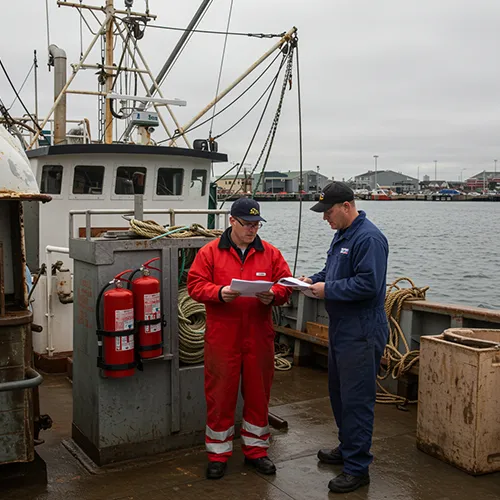
Dockside safety examinations are designed to verify that required lifesaving and firefighting equipment is present, functional, and properly maintained. For vessels operating offshore, this includes EPIRBs, immersion suits, life rafts, visual distress signals, fire extinguishers, and navigation lights. Documentation and equipment condition are reviewed to ensure regulatory compliance.
Examiners also assess how well crews understand their safety responsibilities. Questions about man-overboard procedures, flooding response, and fire drills may be asked informally to gauge familiarity. The expectation is not just equipment ownership, but operational competence.
Compliance decals signal a baseline standard, not operational excellence. A vessel that treats the dockside exam as the only safety benchmark may meet minimum requirements but still expose itself to preventable risk. Proactive operators understand that compliance is the floor, not the ceiling.
Beyond the Sticker: What Examiners Really Look For
While equipment presence is important, condition and accessibility often receive closer scrutiny. Fire extinguishers must be properly mounted and inspected, not buried beneath gear. Life rafts must be within service dates and correctly secured. Emergency exits and escape routes must remain unobstructed.
Examiners also observe general housekeeping and vessel organization. Cluttered decks, poorly maintained machinery spaces, and degraded non-skid surfaces may not trigger citations directly, but they influence perceptions of overall vessel discipline. A vessel that appears neglected in small ways raises concerns about unseen risks.
Consistency in documentation is equally important. Maintenance logs, safety drill records, and equipment inspection reports demonstrate that safety is integrated into daily operations. Well-maintained records often reflect well-maintained vessels.
Insurance Surveys and Their Growing Influence
Insurance carriers have increased their reliance on condition surveys and risk assessments. Underwriters seek reassurance that vessels are maintained to standards that reduce claims exposure. As premiums rise across the industry, insurers are more selective about the risks they assume.
A marine survey conducted for insurance purposes may examine hull condition, machinery health, electrical systems, and fire suppression capabilities. Surveyors often provide recommendations that must be addressed within specified timeframes. Failure to comply can affect coverage or renewal terms.
Insurance surveys can influence vessel value and operational flexibility. A clean survey supports favorable premiums and smoother renewals, while repeated deficiencies can lead to increased costs or restrictive policy conditions.
Common Deficiencies Seen in Offshore Fishing Vessels
Across the fleet, certain deficiencies appear frequently. Expired safety equipment servicing, incomplete drill documentation, malfunctioning navigation lights, and improperly secured batteries are among the recurring findings. These issues are often simple to correct but easy to overlook during busy seasons.
Stability awareness is another area of concern. Improper loading practices, unsecured gear, or lack of familiarity with vessel stability characteristics can elevate risk offshore. Inspectors may question how catch weight, fuel levels, and ice loads affect trim and stability.
Crew training gaps also surface during exams. If crew members cannot clearly explain emergency procedures or locate key safety equipment quickly, examiners take notice. Prepared crews demonstrate operational maturity.
Stability Awareness and Documentation Readiness
Stability remains one of the most critical safety factors in commercial fishing. Even minor shifts in load distribution can significantly affect a vessel’s behavior in heavy seas. Maintaining up-to-date stability information and understanding its practical application is essential.
Documentation readiness supports inspection success. Clear maintenance schedules, servicing records for EPIRBs and life rafts, and documented drills show that safety is systematic rather than reactive. Organized records reduce inspection time and prevent avoidable findings.
When vessels integrate stability awareness and documentation discipline into daily routines, inspections become confirmation of good practice rather than stressful events. This mindset reduces operational friction and strengthens confidence among regulators and insurers alike.
Turning Inspection Preparation Into Operational Strength
The most resilient operations treat inspection readiness as part of their culture. Regular internal walkthroughs, equipment checks, and short safety briefings help identify small issues before they become formal deficiencies. This approach distributes responsibility across the crew rather than placing it solely on the captain.
Structured preparation also enhances emergency response capability. Crews who routinely review procedures and inspect gear are more likely to react effectively during real incidents. In this way, inspection preparation becomes practical training.
Operational strength grows when readiness is continuous. Instead of reacting to inspection notices, vessels that maintain constant preparedness experience fewer disruptions and greater overall reliability.
Conclusion: Readiness Is a Daily Practice, Not a Pre-Inspection Event
For New Bedford’s offshore fishing fleet, regulatory exams and insurance surveys are not obstacles—they are opportunities to validate sound practices. Vessels that approach inspections strategically reduce compliance stress and financial exposure.
Continuous readiness improves more than regulatory outcomes. It protects crews, supports insurance stability, and preserves operational schedules. When preparation becomes routine, inspections lose their disruptive impact.
Maintaining inspection readiness from dockside to deep sea ensures that vessels remain safe, compliant, and professionally managed. In a demanding industry, disciplined preparation is one of the most reliable tools available for long-term success.
Ensure the utmost safety and compliance for your marine operations. For expert advice and comprehensive marine safety services, call us at 508-996-4110 or email tom@marinesafetyconsultants.com. Let's prioritize your safety together.