 Introduction: Why Near Misses Matter in Commercial Fishing
Commercial fishing out of New Bedford operates at an unforgiving pace. Crews haul heavy gear, manage hydraulics, work around snapback zones, and operate in weather that can shift without warning. In this environment, dangerous situations occur regularly—even if they do not always result in injury or damage. These close calls are near misses, and they represent some of the most valuable safety information a vessel will ever receive.
A near miss is not a harmless event. It is an exposure that ended well this time. When a line parts but misses a deckhand, when a load shifts but does not cause a fall, or when a vessel passes uncomfortably close in fog without contact, the outcome may be safe—but the vulnerability remains. Ignoring these moments leaves the same risks in place for the next trip.
Strong operations treat near misses as early warnings rather than inconveniences. By capturing and reviewing these events, vessel owners and captains can make small corrections that prevent major casualties. This approach strengthens both crew safety and operational reliability across the fleet.
What Counts as a Near Miss in a New Bedford Working Fleet
Near misses take many forms, and not all of them are dramatic. A slip on a wet deck that nearly becomes a fall, a snagged line that suddenly surges, or a gaff that swings unexpectedly are all legitimate warning signs. The test is simple: if the outcome could reasonably have been injury, flooding, loss of stability, or equipment damage, it qualifies.
Dockside events deserve equal attention. The waterfront environment in New Bedford includes cranes, forklifts, tight gangways, fueling operations, and heavy gear transfers. A near miss during offloading, ice handling, or vessel turnaround may feel routine, but it signals that a task or layout could be improved.
Navigation-related near misses are also common in the region’s congested waters. Buzzards Bay, ferry routes, tug traffic, and fishing gear in the water create frequent close-quarters situations. A late radio call or misunderstood maneuver may not cause a collision, but it reveals a breakdown in communication or situational awareness that should not be dismissed.
Why Near Misses Go Unreported and What That Costs
Despite their importance, near misses often go unreported. Fishing crews operate under time pressure, and there is rarely enthusiasm for additional documentation. In some cases, near misses are seen as “part of the job,” particularly in high-risk tasks such as hauling or setting gear.
Fear of blame is another powerful barrier. If reporting a near miss leads to criticism or tension, crew members quickly learn to stay quiet. Over time, silence becomes the norm, and small warning signs disappear from view until a serious incident forces attention.
The cost of ignoring near misses is repeat exposure. The same worn non-skid surface, the same unclear hand signal, the same rushed maneuver continues unchanged. Eventually, one of those exposures produces an injury, equipment failure, or regulatory scrutiny that could have been avoided with a simple earlier correction.
Turning a Near Miss Into Action: A Simple Review Process
An effective near-miss review process does not need to be complex. It begins with capturing the basic facts: what task was underway, what happened, where it occurred, and what prevented a worse outcome. This information can be recorded quickly in a log or brief written note.
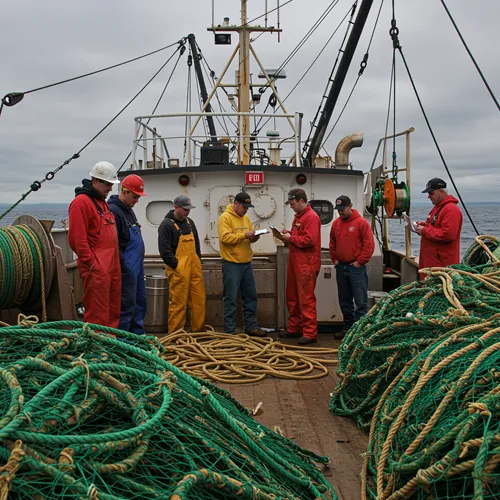
The next step is a short crew discussion. This is not a disciplinary meeting. It is a practical conversation focused on identifying root causes and agreeing on improvements. A five-minute review after the task is complete can often uncover factors that were not obvious in the moment.
Tracking patterns over time multiplies the value of this process. If similar events occur during the same task or under similar conditions, the issue is likely systemic rather than accidental. Recognizing those patterns allows vessel leadership to address underlying problems before they escalate.
Root Causes: Fatigue, Equipment, Environment, and Communication
Near misses rarely occur in isolation. Fatigue is a common contributor in commercial fishing, where long hours and limited rest reduce reaction time and decision-making clarity. A crew member who might normally react instantly may hesitate just long enough for a close call to occur.
Equipment condition also plays a significant role. Worn lines, unreliable hydraulics, poor lighting, or degraded non-skid surfaces increase the likelihood of a near miss. Over time, crews adapt to equipment shortcomings, normalizing higher levels of risk.
Communication breakdowns are another frequent factor. Unclear hand signals, incomplete radio calls, or assumptions about who is monitoring what can quickly create confusion. When near misses are examined carefully, communication gaps often emerge as a central cause.
Corrective Actions That Actually Stick Onboard
The most effective corrective actions are simple and practical. Marking snapback zones, rerouting lines to reduce snag hazards, improving lighting at key stations, or adjusting task sequences to reduce congestion can all produce measurable safety gains without slowing operations.
Procedural improvements should be clear and repeatable. Standardizing verbal calls during deck evolutions or adopting consistent radio formats in restricted visibility reduces ambiguity. These small adjustments create predictability, which is critical in high-risk environments.
Training targeted to identified weaknesses reinforces improvement. If a near miss involves stability concerns, flooding risk, or man-overboard exposure, incorporating a focused drill builds competence. Repetition turns safer practices into habit.
Building a Crew Culture Where Reporting Improves Respect and Safety
A strong reporting culture depends on trust. Crew members must believe that raising concerns will lead to solutions, not punishment. When near-miss reporting results in visible improvements, confidence in the process grows.
Leadership behavior sets the tone. Calm, solution-oriented responses encourage transparency. Dismissive reactions discourage it. Over time, the attitude of the captain and senior crew determines whether near misses are shared or buried.
A culture that values learning improves more than safety. It strengthens teamwork, enhances professionalism, and demonstrates operational maturity. Buyers, insurers, and regulators tend to view such operations as lower risk because they actively manage hazards rather than react to disasters.
Conclusion: A Stronger Fleet Starts With Capturing the Small Warnings
Near misses are the most accessible safety data available to a fishing vessel. They occur frequently, cost nothing to observe, and provide insight into how work is truly being performed. Ignoring them wastes an opportunity to improve before consequences escalate.
Capturing and reviewing near misses is not about adding bureaucracy. It is about making practical adjustments that protect crews and equipment. Small improvements made consistently can prevent major casualties in the future.
For New Bedford’s commercial fishing fleet, learning from close calls strengthens resilience. Each near miss addressed today reduces the likelihood of tomorrow’s tragedy, helping ensure that every crew returns safely to port after each trip.
Ensure the utmost safety and compliance for your marine operations. For expert advice and comprehensive marine safety services, call us at 508-996-4110 or email tom@marinesafetyconsultants.com. Let's prioritize your safety together.