
Introduction
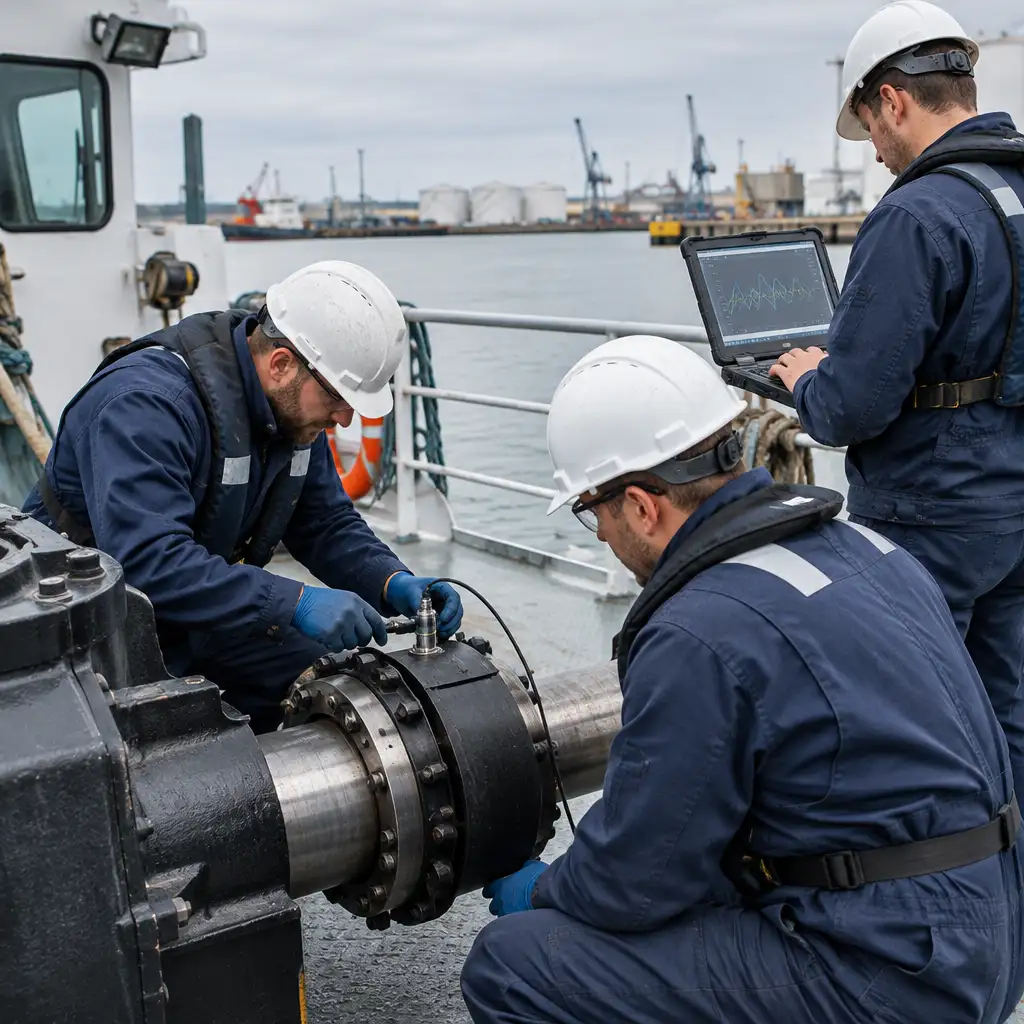
Marine surveys remain a critical element of vessel management, insurance valuation, and regulatory compliance. Advances in condition-based monitoring, sensor telemetry, and predictive analytics give vessel owners and fleet managers new tools to improve the quality and efficiency of hull and machinery surveys. When used correctly, remote monitoring can inform survey planning, reduce unplanned downtime, and provide a clearer basis for valuation and risk assessments.
For professionals responsible for vessel safety and operational readiness, the integration of sensor data into survey workflows offers practical benefits: targeted inspections, earlier detection of degradation, and evidence-based maintenance prioritization. These capabilities are particularly valuable across sectors where mechanical reliability and structural condition directly impact safety and commercial availability, such as towing operations, passenger vessels, commercial fishing, and offshore support.
This article explains how condition-based monitoring, sensor data integrity, and predictive analytics support better marine surveys, and it outlines implementation steps while addressing operational technology cybersecurity concerns. Operators interested in improving survey outcomes and asset management may also find value in coupling monitoring programs with formal vessel surveys and condition reports, such as comprehensive vessel surveys.
Condition-based monitoring and survey readiness
Condition-based monitoring (CBM) shifts the maintenance paradigm from calendar-based servicing to interventions driven by actual equipment health. For hull and machinery surveys, CBM supplies objective evidence about component condition between formal inspections. Hull strain gauges, engine vibration sensors, bearing temperature monitors, and bilge water quality sensors can document trends that are otherwise invisible in periodic visual inspections.
Surveyors benefit from CBM because it helps prioritize inspection areas and focus resources where deterioration is occurring. If sensor trends indicate increasing vibration on a particular propulsion shaft or rising temperatures in a bearing housing, surveyors can plan targeted non-destructive testing, oil analysis, or drydock attention at the right time rather than relying solely on scheduled survey windows.
From a compliance and risk management perspective, condition records improve transparency with insurers and regulators. Operators who combine CBM records with formal survey outputs can present a defensible maintenance history for valuation and claim purposes, creating a stronger basis for decisions about service life, spare parts inventories, and risk controls.
Sensors, telemetry, and ensuring data quality
Not all sensor data is equally useful. The value of remote monitoring for marine surveys depends on selecting appropriate sensor types, establishing correct installation practices, and maintaining reliable telemetry. Common sensor suites for survey support include accelerometers for vibration, strain gauges for hull stress, pressure transducers for hydraulic systems, and fluid-analysis sensors for lube oil and fuel condition.
Data quality controls are essential. Calibration records, sensor location documentation, and routine validation tests reduce false positives and ensure trends reflect real equipment behavior. Operators should maintain a traceable calibration schedule and log any changes in sensor location or hardware so surveyors can interpret data in context.
Telemetry design must account for maritime environments: intermittent connectivity, salt corrosion, and electrical noise. Edge processing—that is, preliminary data filtering and anomaly detection performed locally—can preserve bandwidth and provide immediate alarms, while secure periodic uplinks to shore-based analytics platforms enable long-term trend analysis for survey planning.
Predictive analytics: turning sensor data into survey intelligence
Predictive analytics applies statistical models and machine learning to sensor time series to estimate remaining useful life, probability of failure, and the expected growth of defects. When these analytic outputs are integrated with vessel maintenance records and operational logs, they become actionable inputs for survey scope and timing.
For instance, an analytics model might predict accelerated wear on a gearbox when abnormal vibration and elevated oil particle counts coincide with heavy-load operational profiles. That insight enables surveyors to schedule gear inspection, borescope examination, or fluid sampling prior to a major failure—reducing the likelihood of emergency drydocking and improving survey outcomes by documenting proactive intervention.
Predictive outputs should be framed as risk indicators rather than absolute certainties. Survey teams combine analytics with physical inspection and non-destructive testing to confirm model findings. This combined approach improves valuation accuracy by substantiating condition statements with both measured trends and verified inspection results.
How remote monitoring improves survey planning, valuation, and downtime
Remote monitoring changes survey planning from a reactive event into a staged process. Surveyors receive pre-inspection data packages that identify priority systems and anomaly timelines. This targeted approach reduces inspection time, concentrates testing where it matters, and often shortens vessel out-of-service periods necessary for survey activity.
Valuation accuracy improves when survey reports include long-term condition data rather than a single point-in-time assessment. Underwriters and buyers value documented maintenance trends because they reduce uncertainty in residual life estimates. Operators who can provide verified sensor histories typically achieve more accurate appraisals and can justify maintenance deferrals or capital planning with documented evidence.
Operational availability benefits as well. By using predictive maintenance to schedule repairs during planned maintenance windows, operators minimize unscheduled downtime. For vessels operating on tight schedules—such as ferries, offshore support vessels, or tugs—this capability preserves service reliability while ensuring machinery and hull issues receive attention before they escalate into survey findings that could limit vessel certificates or commercial use.
Case examples and maintenance prioritization
Case example 1: A small fleet of coastal tugs installed vibration sensors on main engine mounts and propulsion bearings. Over six months, analytics detected a trending increase in vibration on one unit coincident with changes in operating RPM profiles. The operator notified the surveyor and scheduled an intermediate inspection that revealed early bearing wear. Targeted bearing replacement occurred during a planned yard period, preventing a bearing failure that would have required emergency repair and forced survey limitations.
Case example 2: A passenger vessel operator combined hull strain monitoring with periodic ultrasonic thickness measurements. When analytics identified incremental strain anomalies near a hull-to-deck joint, surveyors performed focused non-destructive testing that confirmed localized corrosion. Early detection allowed for phased repairs during scheduled drydock, preserving the vessel’s valuation and demonstrating a robust maintenance approach to the insurer.
These examples illustrate how remote monitoring informs maintenance prioritization: use analytics to identify likely failure modes, apply focused inspections to confirm condition, and schedule corrective work to minimize commercial impact. For surveyors, the value is clearer inspection focus, reduced uncertainty in condition statements, and documentation that links observed anomalies to operational causes.
Implementation roadmap: steps to integrate monitoring with surveys
Step 1 — Define objectives and scope. Identify which survey outcomes you want to influence: shorter inspection times, improved valuation evidence, or reduced downtime. Prioritize systems where failure impacts safety or commercial availability most—propulsion, steering, main engines, and critical hull areas.
Step 2 — Select sensors and data architecture. Choose industry-proven sensors suitable for the marine environment and design a telemetry architecture that balances edge processing with shore-based analytics. Document sensor locations and calibration methods so surveyors can interpret data accurately.
Step 3 — Establish governance and data integrity processes. Maintain calibration logs, access controls, and data retention policies to ensure that sensor records are admissible during surveys, insurance reviews, or incident investigations. This governance should include chain-of-custody procedures for any data used in formal valuations.
Step 4 — Integrate predictive analytics with survey planning. Share analytics summaries with survey teams before inspections. Use trend reports to define inspection scopes and select appropriate non-destructive tests. Combine analytics outputs with maintenance histories to produce survey-ready documentation.
Step 5 — Address OT cybersecurity and operational resilience. Segregate sensor networks from operational control systems where feasible, apply encryption for telemetry, and employ least-privilege access for analytics platforms. Regularly audit network access and include cybersecurity considerations in survey documentation to demonstrate maritime compliance posture.
Step 6 — Review and refine. After initial surveys informed by monitoring, evaluate the effectiveness of sensor placement, alarm thresholds, and analytics models. Continual refinement ensures monitoring stays aligned with survey requirements and operational needs. Operators may also consider coordination with third-party survey and inspection providers to standardize data formats and reporting expectations.
Integrating remote monitoring into survey workflows also supports broader marine risk assessments by providing quantifiable condition data that feeds into operational risk models and maintenance budgeting decisions.
Frequently Asked Questions
Q: How does remote monitoring affect formal survey schedules?
A: Remote monitoring does not replace formal surveys required by flag or class authorities, but it can inform survey timing and scope. Operators use monitoring data to prioritize inspection areas and schedule corrective work during planned maintenance windows, which can reduce unplanned downtime associated with survey findings.
Q: What are the minimum data integrity practices surveyors expect when using sensor records?
A: Surveyors look for traceable calibration records, documented sensor locations, tamper-evident data logs, and clear correlation between sensor trends and maintenance records. Maintaining controlled access and preserving raw data alongside processed analytics helps establish trust in the sensor evidence.
Q: How should operators balance openness to analytics with OT cybersecurity concerns?
A: Adopt a defense-in-depth approach: network segmentation that separates monitoring systems from control systems, encrypted telemetry, role-based access, and periodic security audits. Include cybersecurity controls in procurement and integration plans, and document them when presenting monitoring data during surveys or regulatory reviews.
Condition and valuation surveys, hull and machinery surveys, and specialized vessel evaluations play an important role in marine operations. To discuss survey requirements, contact Marine Safety Consultants at 508-996-4110 or tom@marinesafetyconsultants.com.