Introduction
Waterfront facilities are critical nodes in maritime logistics, fuel transfer, passenger embarkation, and commercial operations. Piers, wharves, and docks are subject to constant environmental loading, tidal cycles, vessel impacts, and material degradation; when structural deficiencies go unrecognized they can compound operational risk and extend downtime during emergencies. Integrating structural assessment results into emergency response planning improves resilience, reduces response time, and protects personnel, vessels, and the environment.
For port operators and waterfront facility owners, the linkage between engineering inspection data and emergency plans such as Vessel Response Plans (VRPs) and Facility Response Plans (FRPs) is not optional — it is a practical necessity. Clear translation of inspection findings into operational controls, prioritized repairs, exercise scenarios, and responder coordination strengthens maritime compliance and enhances marine risk management across the facility footprint.
This article provides actionable guidance for translating pier and wharf structural inspections into emergency response decisions. The recommendations cover inspection methods, load-rating and deterioration indicators, risk-based inspection frequency, linking findings to emergency scenarios, and coordinating with local responders to ensure plans reflect real-world structural conditions.
Inspection methods for piers, wharves, and docks
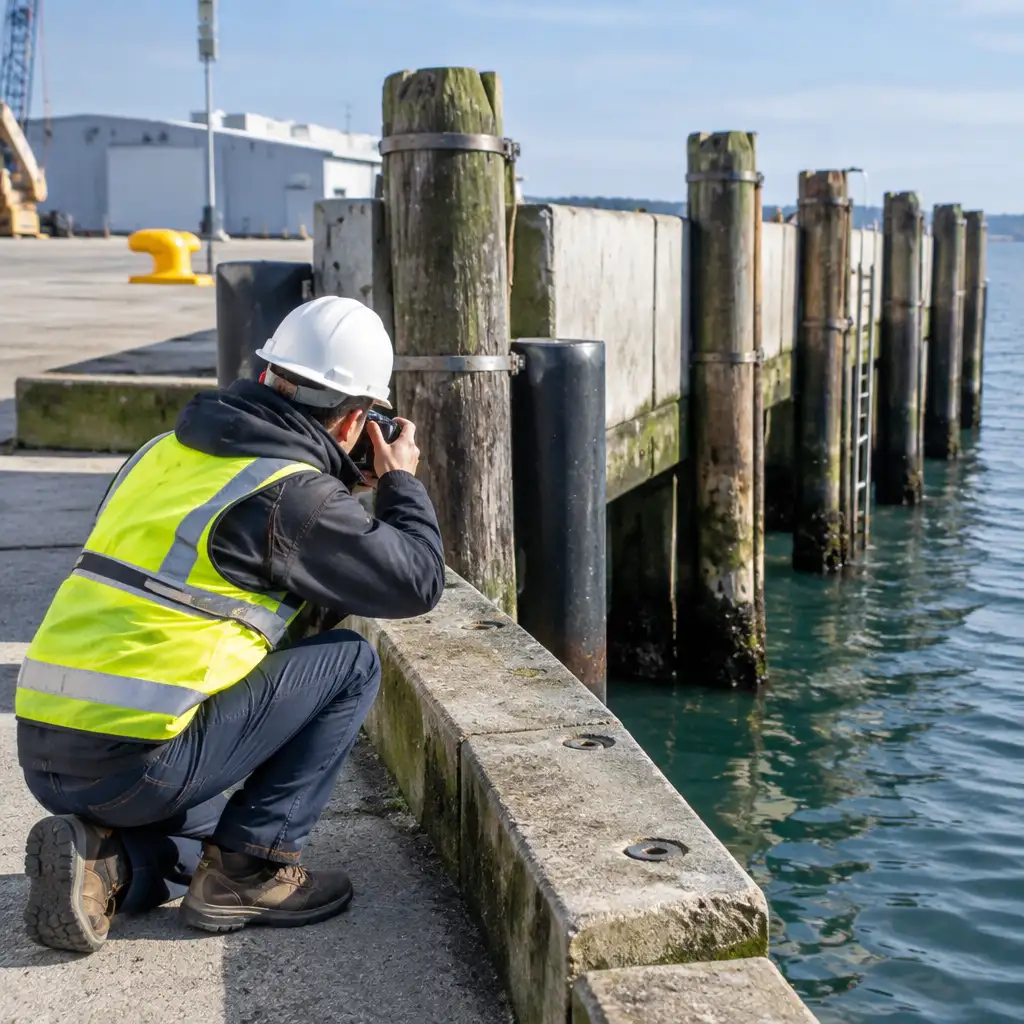
A structured inspection program begins with selecting appropriate methods based on the facility type, materials, and operational exposures. Common inspection modalities include visual walkdowns, remote underwater surveys (ROV or diver), non-destructive testing (NDT) for steel or concrete elements, and load testing where indicated. Visual inspections should be performed by experienced marine surveyors or structural engineers familiar with waterfront construction and design standards.
Underwater inspections are essential for timber piles, concrete pile caps, and bearing elements that are obscured by water. ROVs offer safe, repeatable imaging for routine assessments, while diver inspections enable tactile evaluation and sample collection when deterioration mechanisms are suspected. Above-water elements—decking, fendering, bollards, and utilities—require systematic checking for corrosion, cracking, deformation, and secure connections.
Documenting inspections consistently is vital. Use standardized forms and photographic evidence with location references so findings can be mapped to asset inventories and incorporated into risk registers. Digital inspection platforms that geotag photos and link to asset IDs accelerate analysis and ensure inspection data is usable for emergency planning and prioritised repairs.
Load-rating, deterioration indicators, and actionable findings
Translating inspection observations into operational limits requires load-rating analysis. Load-rating evaluates the remaining capacity of structural members relative to expected live loads: vehicle traffic, container cranes, fuel transfer equipment, and moored vessels. When inspections reveal section loss, rot, or cracking, a conservative load-rating can define safe operating limits until repairs are completed.
Deterioration indicators to watch for include pile section loss, marine borer evidence in timber, concrete spalling and exposed rebar, advanced corrosion on steel piles and connectors, misalignment or settlement of deck elements, and damaged fender systems. Each indicator should be categorized by severity and potential failure mode so emergency plans can reference specific scenarios—for example, a localized deck collapse versus progressive pile failure affecting an entire berth.
Actionable findings are those that require immediate operational controls: restricting point loads, imposing vessel draft or mooring limitations, removing personnel from compromised areas, or shutting down fuel transfer operations. These findings should be recorded with recommended interim controls, estimated repair timelines, and a prioritization score derived from safety, environmental, and business-impact considerations.
Establishing risk-based inspection frequency and prioritization
Inspection frequency should be risk-based rather than calendar-only. Facilities with high vessel traffic, aggressive environmental exposure, or critical function (fuel terminals, passenger berths) warrant more frequent inspections. A risk matrix combining consequence (safety, environmental release, operational downtime) and likelihood (historical degradation rate, vessel impact history) produces a defensible schedule for routine and targeted inspections.
Use a tiered approach: general visual inspections monthly or quarterly for busy facilities; detailed above-water structural inspections annually; and underwater or NDT evaluations every 2–5 years depending on exposure and prior findings. After significant events—vessel collisions, storms, or mooring failures—conduct immediate targeted inspections to reassess risk and adjust emergency plans accordingly.
Prioritization should drive both maintenance and emergency planning. High-priority defects that could cause environmental release or loss of critical berthing capacity should be flagged in the facility risk register and included in contingency plans. Linking inspection schedules to procurement and contracting cycles ensures resources are available for prioritized repairs when the inspection identifies urgent needs.
Translating structural findings into VRPs and FRPs
Emergency plans are most useful when they reflect current conditions. Incorporate inspection-derived operational limits, interim controls, and repair timelines directly into VRPs and FRPs. For example, a VRP berth appendix can list berths unavailable for certain vessel types, allowable mooring configurations, and maximum permissible draft based on the latest load-rating.
FRPs should reference specific structural vulnerabilities that could exacerbate an incident—such as compromised pile capacity under fuel-loading points or damaged fenders that increase collision risk. Attach inspection reports or executive summaries to the plan and create a clear decision matrix for incident commanders that ties structural severity to operational responses (e.g., evacuate pier, stop transfer operations, deploy secondary containment).
Regulatory frameworks often require documented procedures for preparedness and response. Integrating structural assessment outputs demonstrates due diligence in maritime compliance and provides auditors and responders with actionable information during exercises or incidents. Embed contact lists for on-call structural engineers and surveyors in the VRP/FRP so technical assessments can be obtained quickly when an event occurs.
For additional compliance alignment and assistance updating plans, reference maritime compliance services that specialize in VRP and FRP development and review.
Using inspection data to design realistic emergency drills
Drills should reflect plausible failure scenarios identified by inspections. If inspections indicate a high likelihood of localized deck collapse under heavy vehicular loads, design a tabletop and field drill that simulates the consequences: personnel rescue, equipment isolation, and alternate berthing assignments. Using inspection data ensures drills test procedures that are relevant and improve readiness.
Incorporate asset-specific injects into live exercises: simulate limited access to a given pier, reduced mooring capacity, or a fuel transfer outage requiring contingency routing. Document exercise outcomes relative to the inspection-derived decision matrix—did the team follow interim controls, did technical support get mobilized in time, and were environmental protection measures effective?
Training and exercises also provide valuable feedback to the inspection program. Drill observers may identify operational practices that place unexpected loads on structures or reveal communications gaps between operations staff and structural assessors. Use these lessons to refine inspection focus areas and to inform the training curriculum for dock crews and emergency responders.
Coordination with local responders and stakeholders
Effective emergency response relies on coordination with port authorities, local fire and police, environmental response teams, and tug operators. Share non-sensitive, summary-level inspection findings and operational constraints with these stakeholders so joint plans reflect the facility’s structural reality. Pre-incident information reduces response time and helps responders tailor tactics to minimize structural and environmental harm.
Establish memoranda of understanding or liaison arrangements that specify how inspection-derived data will be shared during an incident and who is authorized to declare structural restrictions. Ensure that the local incident command understands the facility’s decision matrix—what constitutes an immediate closure, what interim controls are approved, and how rapid technical assessments will be obtained.
Periodic multi-agency table-top exercises based on recent inspection results foster mutual understanding and streamline decision-making during real events. Coordination also supports community risk communication, allowing operators to explain temporary operational restrictions or repair timelines to stakeholders with clarity and technical justification.
Frequently Asked Questions
Q: How often should underwater pile inspections be performed for an active fuel berth?
A: For high-consequence berths such as fuel terminals, initial practice is to perform underwater inspections every 1–3 years depending on environmental exposure and historical degradation. After significant events (collision, storm), conduct immediate targeted underwater checks. Risk-based schedules tied to consequence and exposure are best.
Q: Can inspection results allow continued operations after a defect is found?
A: Yes—if a qualified structural engineer provides a load-rating and prescribes interim operational controls. These can include limiting point loads, restricting equipment placement, or reducing vessel size/draft. Controls should be documented in the VRP/FRP and accompanied by a repair plan and timeline.
Q: Who should be notified when an inspection identifies a critical structural deficiency?
A: Notify facility operations, the on-call structural engineer or surveyor, port authority if applicable, and local response agencies as defined in the VRP/FRP. Document notification procedures and make contact lists readily available in both digital and hard-copy formats.
For guidance aligning inspection outputs with broader waterfront risk programs and strategic planning, consider engaging marine risk assessments and consulting services to formalize the linkage between asset condition and emergency preparedness.
Effective risk management begins with identifying hazards before incidents occur. Marine Safety Consultants offers practical guidance for vessel operators, facility owners, and maritime organizations. Contact us at 508-996-4110 or tom@marinesafetyconsultants.com.