Introduction
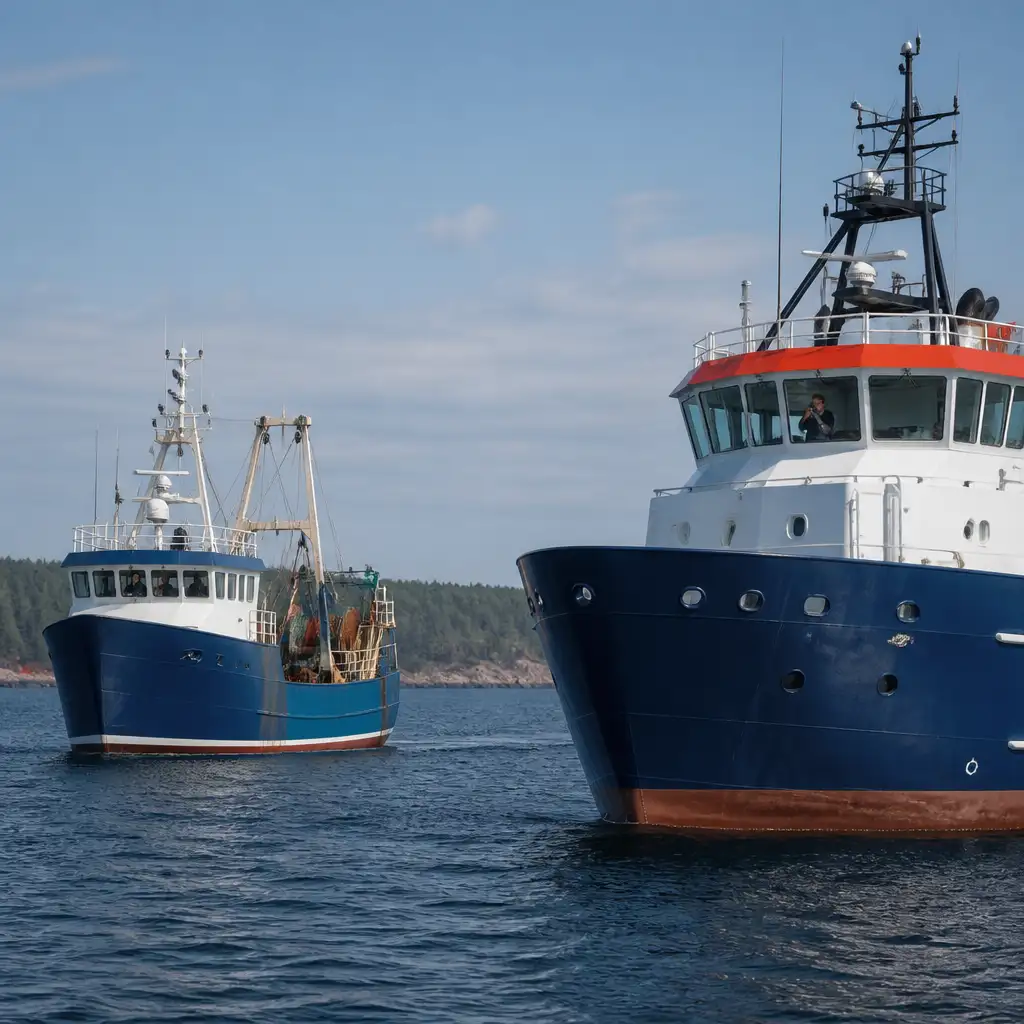
Shared waterways where commercial fishing vessels and offshore support craft operate present a persistent collision risk that affects safety, continuity of operations and regulatory compliance. With increasing offshore activity and dense coastal fishing effort in many regions, passage planning, communications and lookout standards have become essential operational controls for reducing incidents. This article outlines practical measures skippers and operators can apply to improve vessel safety and reduce the likelihood of collision in mixed-use marine environments.
The guidance is written for masters, watchkeepers, operations managers and marine safety officers who must balance operational efficiency with risk mitigation. It draws on common maritime practice, fundamental navigational principles, and established human factors considerations so that measures are both practicable and effective. Where regulation applies, the discussion points operators to the types of compliance and inspection tasks they should expect.
Readers will find actionable advice on passage planning, standardized VHF procedures, AIS use and limitations, lookout standards, coordination between fleets, scheduling approaches to reduce interaction, and the role of training and vessel inspections in sustaining a safe operating environment. Emphasis is placed on coexistence strategies that respect the legitimate needs of both commercial fishing and offshore support operations.
Passage planning and route management
Thorough passage planning remains the first line of defense against collisions. For both fishing skippers and offshore support operators, a plan should record intended track lines, alternate routes, turning points, estimated times of arrival and predicted traffic conflicts. Plans must consider tidal streams, visibility, forecast weather, and known concentrations of fishing gear. Where available, consult local traffic separation schemes, charted precautionary areas and published Notices to Mariners before committing to a transit.
When operations are near offshore energy sites or construction areas, forward planning should include known exclusion zones and typical transit corridors used by windfarm service vessels. Operators can benefit from liaising with project marine coordinators to understand standard approaches and restricted areas; many projects publish guidance for passing vessels and outline safe standoff distances. Maintaining awareness of these operational footprints supports safer passage and reduces unexpected encounters.
For fishing vessels, passage planning must also address the presence of gear such as trawl warps, pot lines or nets which may extend beyond the vessel’s immediate hull. Marking gear, noting gear deployment times in the voyage plan, and maintaining a conservative passing distance when transiting gear-bearing areas reduces entanglement and collision potential. Offshore support craft should treat areas of active fishing as high-risk zones and allow additional clearance when maneuvering.
Technology can support planning, but should not replace seamanship. Chartplotters, radar overlays and electronic chart systems provide situational awareness; however, operators should cross-check data with paper charts, physical lookouts and up-to-date local notices. For projects involving multiple vessel types, consider establishing temporary transit lanes or agreed passing points to limit cross-traffic during peak operations. For information on neutral operational support for wind-related operations, consult offshore wind support services to understand typical project interfaces.
Communication protocols and VHF procedures
Clear, concise and standardized radio communications are critical where different vessel types operate in close proximity. Establish and maintain a continuous bridge watch on the appropriate VHF channel(s) for the area, and use plain language with agreed terms for maneuvers and intentions. When vessels approach each other, initiate a short exchange stating vessel name or call sign, position, intended course and maneuver — for example: “Fishing Vessel GALWAY, this is CTV 12, passing 0.5 nautical miles to port, reducing speed.”
Adopt standard calling procedures for distress and safety as set out by SOLAS and national regulations, and ensure DSC equipment is programmed with correct MMSI data. Operators should avoid lengthy non-essential traffic on primary working channels during complex maneuvers. Where operations involve an organized site, use the site’s working frequency or the designated coordination channel to broadcast planned transits and estimated times. Maintaining a deliberate listening watch reduces surprises and supports early conflict resolution.
When language or terminology differs between crews, agree on a short phraseology list governing routine exchanges. Vessel masters should confirm receipt of critical messages and, when feasible, repeat back the key element to avoid misunderstanding. Log significant radio exchanges in the vessel’s deck log as part of good seamanship and for incident follow-up. Regular radio drills and bridge team briefings on communication expectations promote consistency and reduce misinterpretation.
AIS: capabilities, limitations and best practice
Automatic Identification System (AIS) is a force-multiplier for vessel safety but it has limitations that crews must understand. AIS provides dynamic data such as position, speed and course, and static data like vessel type and dimensions. Offshore support craft and larger fishing vessels with Class A transponders benefit from good AIS practice: ensure static data are accurate, rate-of-turn and navigation status are updated where systems support it, and verify that antenna systems are functioning before departure.
Smaller fishing boats may be fitted with Class B units or operate without AIS. Operators should not rely solely on AIS to detect non-participating vessels or gear. Radar, visual sightings, and electronic plotting overlays remain essential. Watchstanders must be familiar with CPA (closest point of approach) and TCPA (time to CPA) alarms but also validate alarms against radar targets and lookouts to avoid false confidence from erroneous AIS returns.
Where AIS data are available, use target acquisition to inform early maneuvers. Broadcast a short VHF advisory when closing with a small or unidentifiable AIS target to confirm intentions. Consider temporary modification of AIS transmit settings during fishing operations (for example using the ‘fishing’ navigation status) to indicate reduced manoeuvrability or gear deployment, while complying with regulation and safety protocols. Periodic equipment checks and ensuring updated chart and AIS software support accurate information exchange.
Vessel operators should include AIS checks in pre-departure routines and post-arrival reports. For small-boat operations or where AIS is intermittent, increase passive monitoring and coordinate with nearby operators via agreed VHF channels. Vessel inspections that include AIS antenna and power systems are part of wider vessel safety assurance and should be conducted regularly; see vessel inspections for recommended inspection scopes and frequency.
Lookout standards and human factors
A dedicated and effective lookout is one of the most important collision-avoidance defences. Regulatory standards require an effective lookout at all times, but in practice this means assigning a capable person free from other tasks, equipped with binoculars, and briefed on likely conflict areas and high-risk sectors. During hours of darkness, restricted visibility or busy transits, increase lookout resources and rotate duties to mitigate fatigue.
Human factors such as fatigue, complacency and task saturation degrade lookout performance. Implement watch rotation schedules that respect hours of rest requirements and use simple checklists to ensure critical tasks receive attention. Bridge Resource Management principles — cross-checking information between helmsman, navigator and lookout — improve decision-making and reduce single-point failures. Encourage assertive communication so any team member can call for a course adjustment if they perceive a risk.
Make use of equipment to support visual lookout: radar-assisted tracking, night-vision aids where appropriate and AIS overlays on chartplotters. However, emphasize that equipment supplements rather than substitutes for a vigilant human eye. Post-incident reviews commonly identify lapses in lookout or over-reliance on a single sensor; training and routine drills reinforce the right balance between technology and human observation.
Coordination, scheduling and shared use measures
Operational coordination reduces unscheduled encounters. Operators should implement scheduling practices that deconflict peak activity periods, identify high-traffic corridors and establish preferred transit windows. Where feasible, publish intended transit times and routes to local fishing co-operatives or port authorities to facilitate mutual awareness. On larger projects, a marine coordination center can be effective in managing multiple vessels and promulgating temporary arrangements.
Coexistence strategies focus on information exchange and agreed conduct. Simple measures include recommended passing distances, speed restrictions in gear-dense areas, and agreed positions for crossing tracks. In some jurisdictions, temporary marking of working areas or the use of advisory buoys can delineate safe transit lanes for support vessels; these instruments must be coordinated with local authorities and charted where appropriate.
Risk-based measures such as dynamic exclusion zones during high-risk operations (e.g. towage, heavy lifts, dive operations) can be used to protect both fishing gear and support vessels. Liaison between vessel operators prior to operations — via direct VHF exchanges or a shared digital platform — enables real-time adjustments. Incorporating these coordination practices into operational plans supports marine risk assessments and helps meet broader maritime compliance expectations.
Training, inspections and maritime compliance
Sustaining improved vessel safety depends on training, routine inspections and adherence to regulatory standards. Regular maritime training programs should cover passage planning, collision regulations, bridge resource management and VHF procedure drills. Practical onboard exercises that simulate mixed-traffic transits and gear interaction scenarios build crew competence and help identify procedural gaps before they lead to incidents.
Routine vessel inspections and audits verify that safety-critical systems — steering, propulsion, navigation lights, radar and AIS — are serviceable and that emergency equipment is accessible. A formal inspection regime ties into the vessel’s safety management framework and supports risk reduction. Owners and operators should document maintenance and inspection outcomes and address deficiencies promptly to remain aligned with maritime compliance services and national requirements.
Risk management is a continuous process. Conduct periodic marine risk assessments to identify evolving hazards from new offshore activities or shifting fishing patterns and adjust operational controls accordingly. Incorporate lessons from near-misses and incidents into training syllabi and briefings. Coordinated investment in crew competence and vessel reliability yields measurable improvements in operational resilience and contributes to a safer shared-waterway environment.
FAQ
Q: What VHF channel should I use to coordinate passage with an offshore support vessel?
A: Use the designated working frequency published for the project area where one exists, otherwise maintain a continuous listening watch on the regional calling channel and the local harbor frequency. Establish a short, clear exchange stating vessel name, position and intent, and confirm receipt.
Q: Can AIS be relied on as the primary means to avoid collisions?
A: No. AIS is a valuable tool but has limitations: not all vessels transmit, data may be incomplete or delayed, and small craft may be absent. Radar, visual lookouts and proactive communication remain essential complements to AIS for effective collision avoidance.
Q: How should fishing gear be factored into passage planning?
A: Record gear deployment locations and times in the passage plan, mark gear conspicuously, and allow additional passing distances when transiting active fishing areas. Communicate with nearby vessels when gear is deployed and consider adjusting transit times to avoid peak fishing activity.
Effective risk management begins with identifying hazards before incidents occur. Marine Safety Consultants offers practical guidance for vessel operators, facility owners, and maritime organizations. Contact us at 508-996-4110 or tom@marinesafetyconsultants.com.